I’ve invited my dietitian friend and fellow Dietitian Jenna Braddock to share a guest post with you all today. She’ll be answering this question for you guys: Is Coffee Healthy? Enjoy!
 Hi fANNEtastic Food readers! My name is Jenna Braddock and I so happy to share some hopefully helpful words with you. I am also a registered dietitian nutritionist and a specialist in sports dietetics. My blog, Make Healthy Easy, is all about real life strategies and recipes for better health. I’m very active on Instagram, sharing pictures of food, fitness and real life and also have a #MakeHealthyEasy Pinterest Board with over 50 pinners sharing ideas and recipes to help make healthy living a little bit easier.
Just last week I was at a professional breakfast event. While we were eating, everyone introduced him/herself and what they did. As is often happens, after sharing that I am a registered dietitian, the colorful comments started flying — “Let’s see what the nutritionist is eating” and “Well, don’t look at my plate.” I really loathe these kind of statements and was just about to try to change the subject when someone asked, “What do you think about coffee? Is it healthy? I drink A LOT.”
Now this is a WAY more fun topic to talk about at a work breakfast. I am never in the mood to be the food police, especially early in the morning and before my cup of coffee. 😉
Coffee is a topic that probably touches us all in some way. You either drink it or are around someone everyday who does. We Americans happen to have a love affair with coffee. Data from the Harvard School of Public Health estimates that 54% of us (over 18) drink coffee daily and the average intake is 3.1 cups, to be exact. (source) So it’s no wonder why we all (or at least the gentleman at my breakfast) would probably like to know if it’s a healthy drink choice.
Hi fANNEtastic Food readers! My name is Jenna Braddock and I so happy to share some hopefully helpful words with you. I am also a registered dietitian nutritionist and a specialist in sports dietetics. My blog, Make Healthy Easy, is all about real life strategies and recipes for better health. I’m very active on Instagram, sharing pictures of food, fitness and real life and also have a #MakeHealthyEasy Pinterest Board with over 50 pinners sharing ideas and recipes to help make healthy living a little bit easier.
Just last week I was at a professional breakfast event. While we were eating, everyone introduced him/herself and what they did. As is often happens, after sharing that I am a registered dietitian, the colorful comments started flying — “Let’s see what the nutritionist is eating” and “Well, don’t look at my plate.” I really loathe these kind of statements and was just about to try to change the subject when someone asked, “What do you think about coffee? Is it healthy? I drink A LOT.”
Now this is a WAY more fun topic to talk about at a work breakfast. I am never in the mood to be the food police, especially early in the morning and before my cup of coffee. 😉
Coffee is a topic that probably touches us all in some way. You either drink it or are around someone everyday who does. We Americans happen to have a love affair with coffee. Data from the Harvard School of Public Health estimates that 54% of us (over 18) drink coffee daily and the average intake is 3.1 cups, to be exact. (source) So it’s no wonder why we all (or at least the gentleman at my breakfast) would probably like to know if it’s a healthy drink choice.
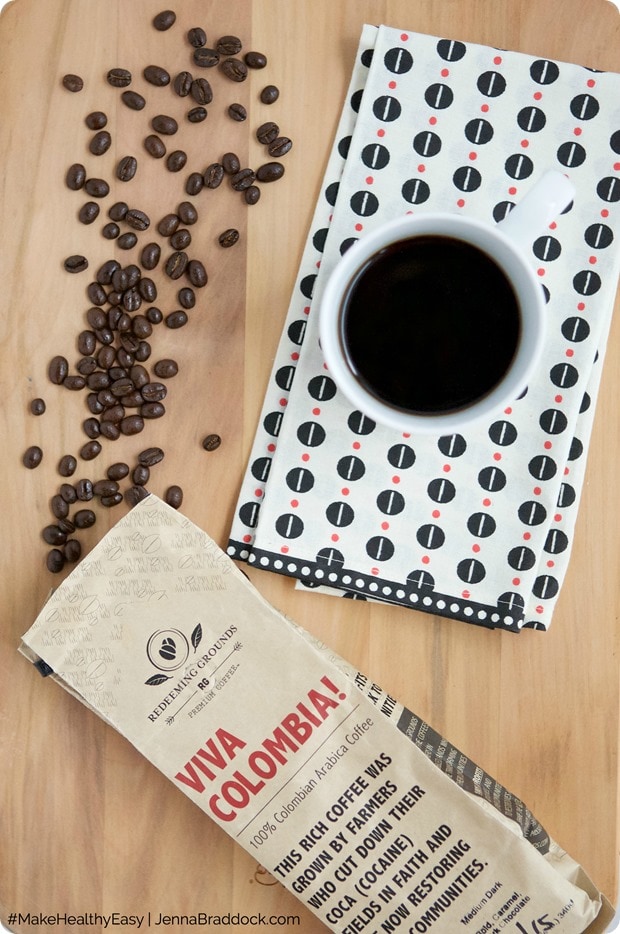
Is Coffee Healthy? guest post by: Jenna Braddock, RDN
Want to save this post?
Enter your email below and get it sent straight to your inbox. Plus, I'll send you great content every week!
Is Coffee Actually Nutritious?
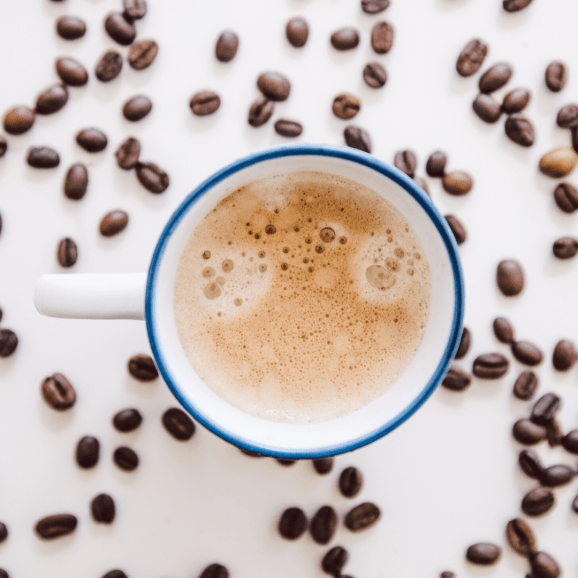
Coffee is technically a plant based beverage. Therefore, it’s got to have some super powers in there somewhere. And research has indeed found this to be true as coffee is a source of micronutrients and antioxidants, specifically polyphenols. In fact, a 2005 study identified coffee as American’s #1 source of dietary antioxidants (wow).Health Benefits of Coffee Consumption
Researchers have been looking at the connection between coffee consumption for some time. Most of the studies are observational in nature and not intervention studies (meaning they didn’t “treat” anyone with coffee). While this is not rock-solid science, it is helpful in drawing conclusions about how coffee may be beneficial and how much is appropriate. Here’s the summary of some of the most significant research conclusions on coffee: Disease Prevention:- People who are long time coffee drinkers seem to have a lower risk for developing diabetes. Researchers speculate that this positive connection is due to the antioxidants, like chloregenic acid, and magnesium, which may improve insulin sensitivity.
- Moderate coffee intake of 1-3 cups a day has been associated with a lower risk for developing Parkinson’s disease, especially in women.
- Coffee does NOT seem to promote heart disease or stroke and may actually reduce the risk of a stroke.
- Regular coffee consumption may lower your risk for developing liver disease and colon cancer.
- Coffee containing caffeine may help prevent gallstones.
- “Lifetime” consumption of caffeinated coffee may be associated with better cognitive performance in woman, especially when they are over the age of 80.
- Regular coffee consumption was found to be protective against all causes of mortality (death), especially when intake was at 4 cups or more a day.
- While coffee specifically has not been studied in athletic performance, caffeine has been well researched and shown to be an acceptable and effective ergogenic aid. The recommended amount of caffeine to enhance performance is equivalent to about 1 large mug for females and up to 3 large mugs for men. (Please work with a sports dietitian to determine if you should take in caffeine/the optimal amount of caffeine to consume for sports performance. This is also something Anne and Jason discuss at length in their Nutrition for Runners program.)
Cons of Coffee Consumption
The great news for coffee lovers is that many of the concerns with coffee consumption have been refuted by better science. However, there are still some concerns to note. The first is related to actual coffee, specifically unfiltered coffee, like espresso and French press brewed. Research has linked this type of prepared coffee to increasing LDL cholesterol levels, albeit slightly. So, if you are concerned with high cholesterol levels, I would recommend sticking to good ‘ol regular brewed coffee. The next list of concerns is specific to caffeine itself. Too much of anything is not good and caffeine (and ultimately coffee) is no different. First, excessive caffeine intake can have detrimental effects on your health by contributing to anxiety, irregular heartbeat, insomnia, poor sleep and daytime fatigue. I recommend my clients quit the caffeine by 2pm to ensure enough time for it break down, leave the body and enable a good night’s sleep. Second, for those who are hypertensive, excess caffeine intake can elevate blood pressure and make it difficult to manage. Lastly, there is a genetic mutation in some individuals that causes the body to break down caffeine more slowly. In these people, coffee intake of 2 or more cups a day could be associated with a higher risk for cardiovascular disease. And remember, caffeine found in other not-so-natural-beverages (i.e. energy drinks) are not going to have really any of the benefits that coffee contains. So if any of the above categories relate to you, speak to your physician and dietitian to determine a safe amount of caffeine for your health. Let me challenge you with a phrase I’ve been using with my clients for a long time: “Man cannot live on coffee alone.” If you are using coffee (or caffeine) alone to power through your days and give you “energy”, then I think it’s time you take a good look at the bigger picture and see where you could improve your eating and sleep habits too.Benefits of Coffee Beyond Nutrients
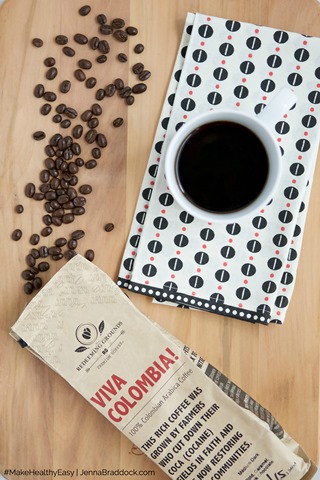
I happen to love coffee and enjoy a cup daily. I particularly love fancy coffee, especially when it’s roasted by someone local or a “company” with a cool story. One of the things I enjoy most about coffee is that it forces me to slow down a bit and savor something. Even if it’s just a minute or two, I appreciate the reminder to slow down and be present. I think we can all benefit from this. Plus, we know that taking a moment of reflection significantly improves our ability to eat mindfully too.Coffee Production
While I am no expert, I find the process of growing, harvesting, transporting and roasting coffee very fascinating. I’m not going to go in to all those details here because like I said, I’m not an expert. I would highly recommend visiting a local roaster and touring their facilities. I have found that many of these artisans have a deep love for their craft and for taking care of the earth and people around the industry. If you are interested in reading more about coffee production, please visit the The Institute for Scientific Information on Coffee.